Reported average monthly recurring revenue
Context
I initially treated growth as a supply problem.
I founded a small commerce / marketplace venture with approximately zero initial investment. My first belief was that more sellers, products, inventory, and sales activity would create growth. Orders did happen, but adding supply did not automatically produce repeat behavior. The challenge shifted from whether I could make a sale to whether buyers had a reason to come back and recommend the offering.
My ownership
I owned the venture and its change in direction.
The work combined product and business responsibility: finding merchants, understanding buyers, shaping selection, generating orders, and reconsidering the growth thesis. Direct outreach and repeat-buyer referrals played a substantial role in acquisition. This was founder work close to the operating behavior of a small business. The Shoppy storefront brought the offering into a familiar social channel, with orders and reseller inquiries directed through DMs.
Evidence
Complaints and repeat behavior challenged the original belief.
I looked at complaints, product quality, seller quality, and repeat-purchase behavior. More supply was not fixing the reason some customers hesitated to return. The important pattern concerned reliability: buyers needed to trust both the product and the seller enough to make another purchase. This evidence changed the diagnosis from insufficient volume to insufficient confidence. It made selection quality a growth question rather than simply an operational concern.
FROM THE ORIGINAL BUSINESS
A storefront built
around conversations.
Shoppy lived in a familiar social channel. The profile made the operating model visible: browse products, place a prepaid order by DM, or reach out as a reseller.
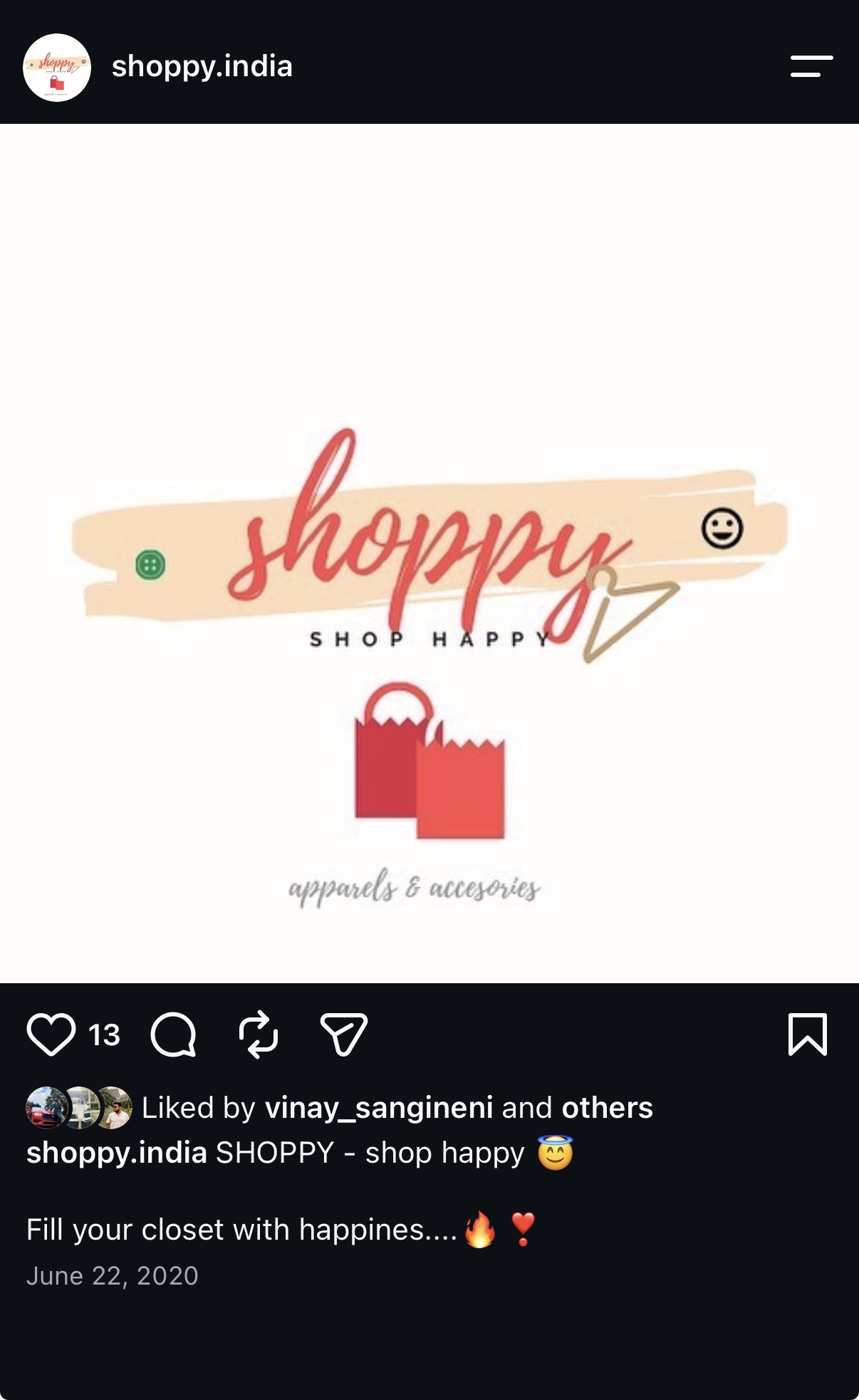
Give the business an identity.
The original post introduced Shoppy’s apparel and accessories identity with the promise “shop happy.”
Open original post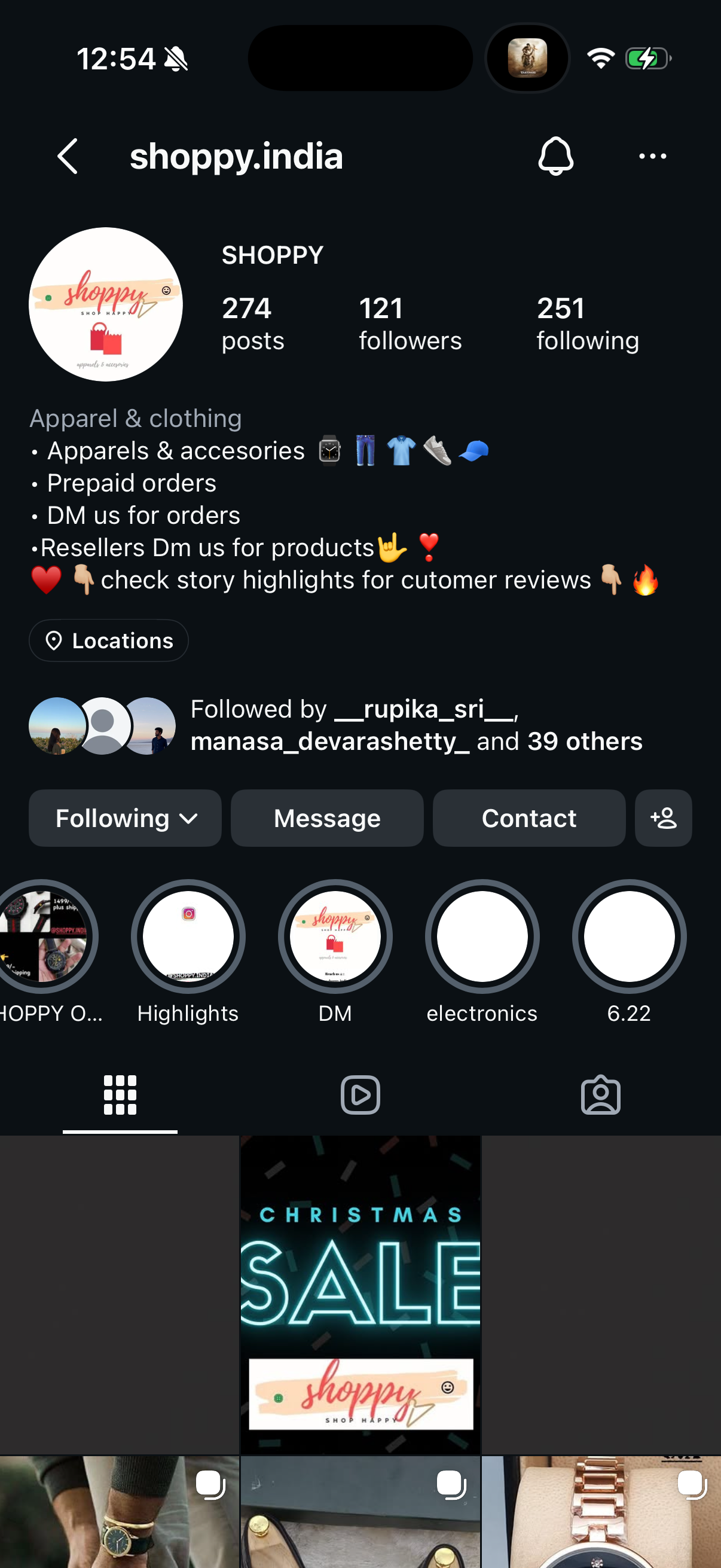
Make the next step clear.
Ordering instructions, reseller outreach, and customer-review highlights sat alongside the catalog.
Open original profileThe storefront could invite a first order.
The quality of the offering had to earn the next one.
Product judgment
Choose a smaller, more dependable proposition.
I shifted away from maximizing seller and product volume toward better sellers, better products, narrower selection, recommendations, and focused product lines. The aim was to improve the conditions for repeat buying rather than keep expanding an undifferentiated catalog. This was a product and marketplace judgment: supply matters only if buyers can find enough reliable value in it to return.
| Dimension | Initial belief | Revised direction |
|---|---|---|
| Growth constraint | Insufficient supply | Insufficient trust |
| Priority | More sellers and products | Better sellers and focused products |
| Trade-off | Catalog breadth | Narrower, more reliable selection |
| Acquisition | Direct outreach | Direct outreach + repeat-buyer referrals |
Decision summary reconstructed from Mani’s account. Original artifact not supplied.
Trade-off
Give up breadth to strengthen trust.
The decision accepted a narrower selection at the expense of catalog breadth. It also changed where effort went—from simply bringing more supply into the venture toward the quality of the offering and the experience buyers could rely on. The precise criteria for seller selection, the number of products removed, and any controlled before-and-after comparison are not supplied, so no such experiment is claimed.
Influence & execution
Change the offering through merchant and buyer relationships.
The venture relied on direct outreach and repeat-buyer referrals rather than paid acquisition. I used the emerging understanding of complaints and quality to focus sellers, products, and recommendations. The Instagram storefront advertised prepaid orders, invited reseller inquiries, and directed buyers to customer-review highlights. These were visible parts of how the business presented its offering and built customer confidence.
Outcome
A small operating business, with a more precise growth diagnosis.
The venture involved approximately 24+ merchants, reported around $1K average MRR, and used $0 paid acquisition. Those figures describe the venture, not a causal estimate of the trust-focused change. A remembered repeat-buyer improvement is omitted because its definition is not precise enough to publish. The key defensible change is the move from maximizing supply to improving reliability and focus.
Learning
The obvious constraint is not always the real one.
I learned to examine the mechanism behind growth rather than assume that more input creates more value. Orders proved that some demand existed; repeat behavior raised a different question about trust. The product direction became more focused after I reconsidered that assumption. This early lesson recurs in later work: diagnose the constraint before scaling the response.
THE REASONING BEHIND THE RESULT
What made the decision difficult?
Inspect ownership, evidence, alternatives, technical constraints, and the limits of the result.
CONTINUE THROUGH THE WORK