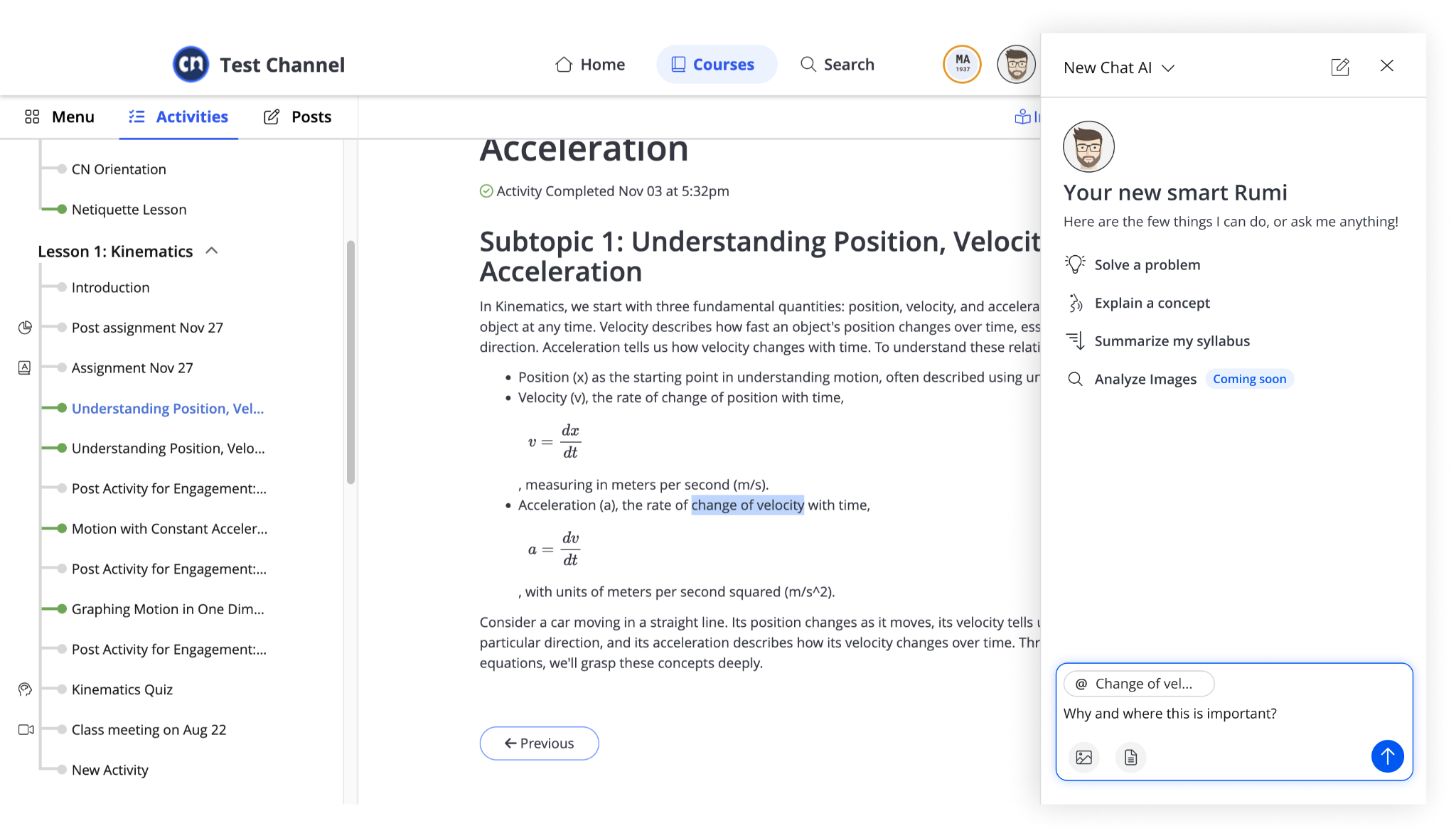
Added during the modernization period
Context
The existing product had years of customer familiarity.
The core LMS had existed since approximately 2011. Existing institutions were familiar with the legacy experience, while prospective customers increasingly expected modern SaaS-quality products. Marketing resources were limited, so the product itself played a meaningful role in institutional evaluation and sales. Modernization mattered because the experience was both a working environment for current users and a visible part of the proposition offered to future customers.
My ownership
I worked across modernization and acquisition support.
My work covered product rebranding, experience modernization, the roadmap, new capabilities, AI features, and product-led acquisition support. I also led Paid Certificates through discovery, PRD, prioritization, development, and launch. Paid Certificates supported a target of moving the B2B/B2C revenue mix from roughly 95:5 toward 50:50; 50:50 was the target, not an achieved split. That capability belongs within this broader modernization story. I do not present myself as the sole owner of institutional sales or all platform growth. The precise approval boundaries and the contributions of individual commercial and engineering partners need more context.
Evidence
Current users and prospects brought different expectations.
The product challenge came from the contrast between familiarity and market expectations. Doing too little risked weak product perception during evaluation. Changing too much risked disruption for institutions already using the system. That tension was the basis for modernization work. One concrete friction was commercial: users entered the free version and encountered subscription pressure only after reaching a limit. The revised plan choice made paid value and free limits visible upfront. The supplied screens also show contextual AI within course content, mobile course controls, paid certification, and an AI-generated feedback editor.
Product judgment
Treat modernization as a product-growth decision.
The central question was how aggressively to modernize an established LMS. A visual refresh alone would not describe the scope: the work included capabilities, AI, roadmap decisions, and acquisition support. At the same time, novelty was not sufficient justification for change. The product had to become more compelling to prospective institutions while remaining a credible working system for existing customers. I brought the commercial proposition into onboarding while preserving a free path. I also supported contextual assistance, mobile access, instructor monetization, and feedback generation. These changes broadened the product value beyond appearance; their exact release order still requires the roadmap.
| Audience | What mattered | Risk to manage |
|---|---|---|
| Existing institutions | Familiarity and continuity | Disruption from excessive change |
| Prospective institutions | Modern SaaS-quality experience | Weak perception from too little change |
| Business | Product-led acquisition support | Over-attributing growth to modernization |
Decision summary reconstructed from Mani’s account. Original artifact not supplied.
BUSINESS VALUE / MAKE THE CHOICE LEGIBLE
Show the value before
asking for the upgrade.
The earlier path started users on free access and surfaced subscription pressure after a limit. I brought paid options into the initial choice while retaining a free route. The intent was to build trust through clear expectations and improve conversion—not to force payment at entry.
Start free. Discover the limit later.
The commercial value was not clearly presented upfront.
Compare the options. Choose how to start.
Paid benefits, free limits, and an upgrade path appear together.
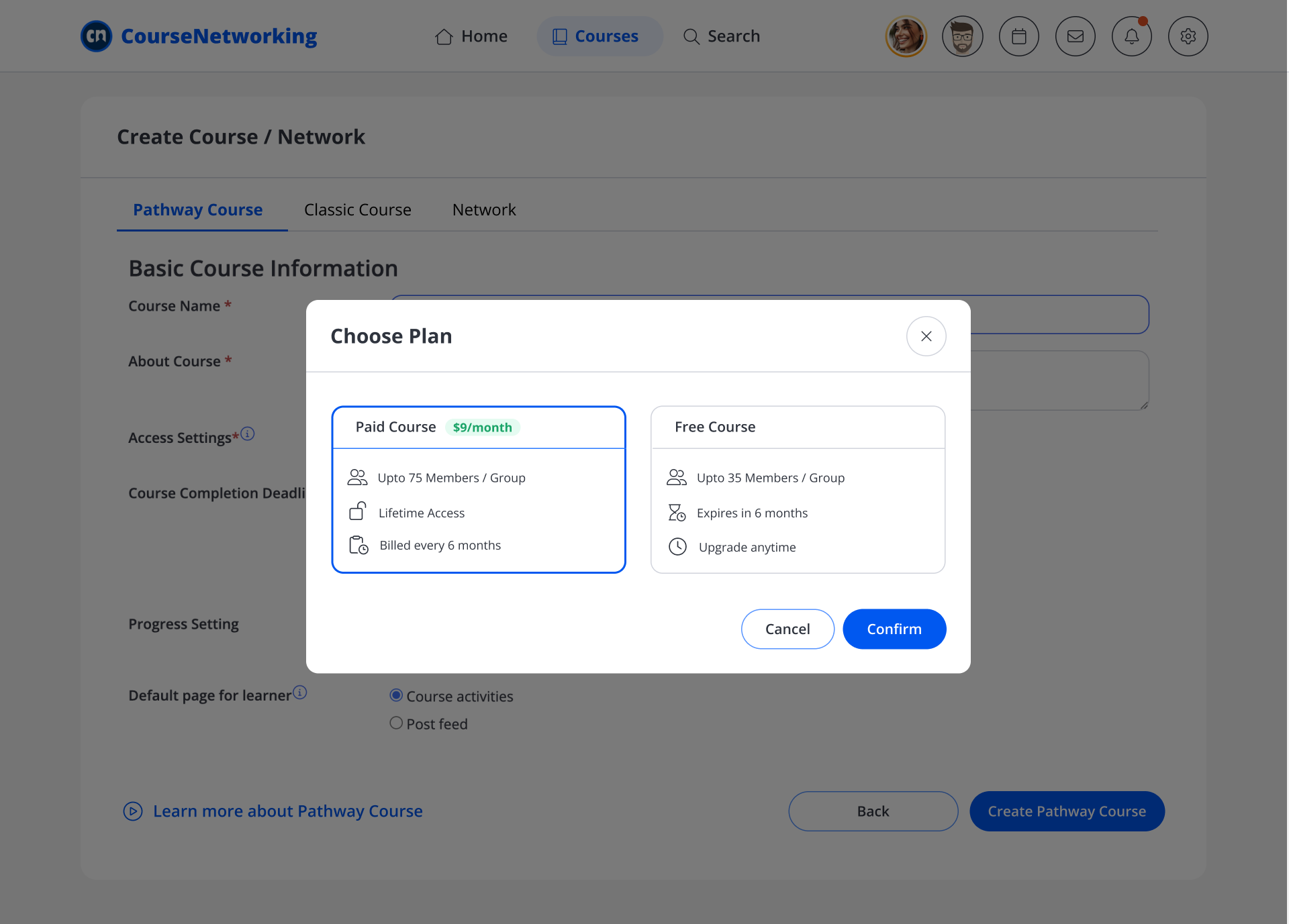
Supplied plan-choice screen. Prices and limits belong to this historical artifact. Improved trust and conversion are the product rationale; a measured uplift has not been supplied.
Inspect originalACCESS / MOBILE RESPONSIVENESS
Bring the working tools
to the smaller screen.
The mobile screen retains course activities and instructor actions, including editing, publishing, sorting, and AI activity generation. It shows how the course workflow was represented on mobile; task-completion results and device testing are separate evidence.
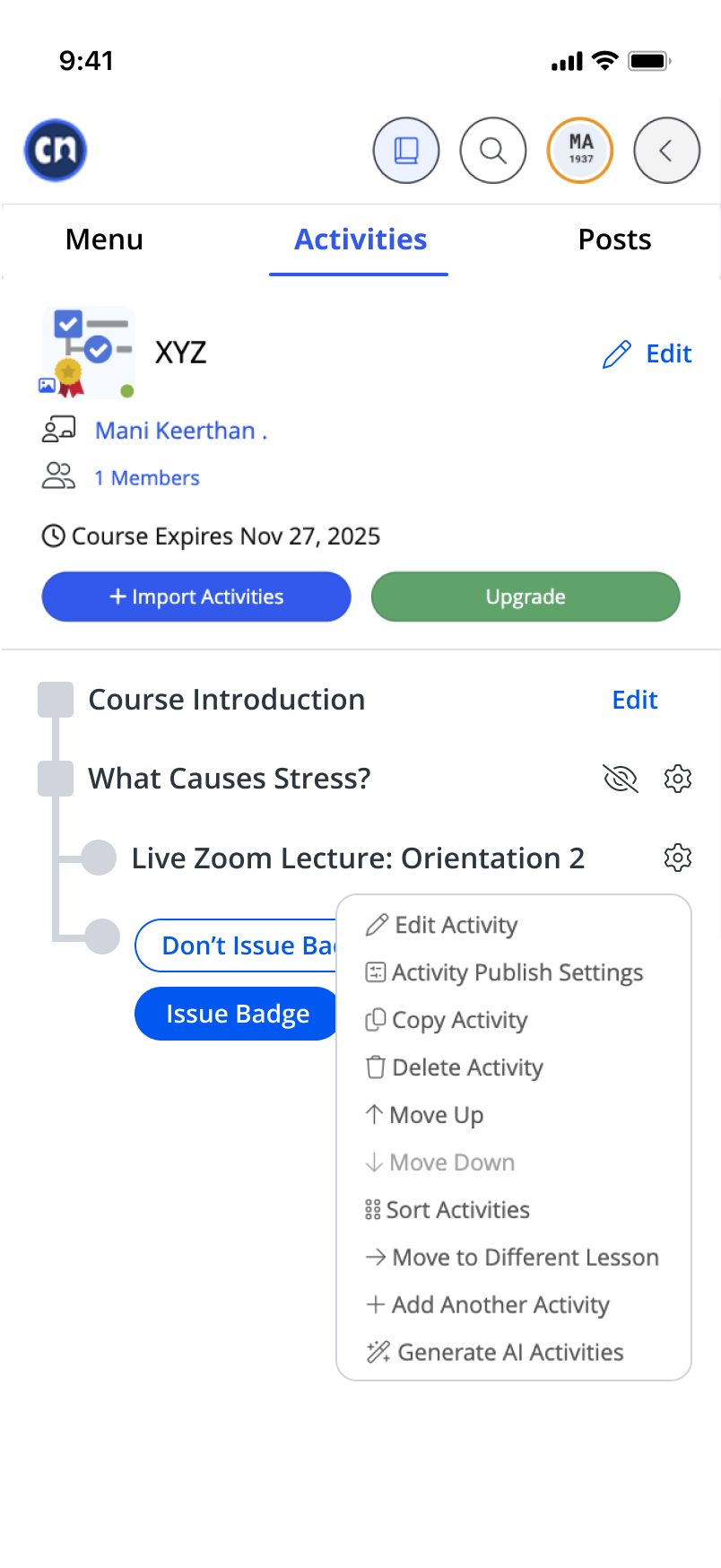
Supplied mobile screen, preserved without reconstructing its controls.
Inspect originalTrade-off
Balance change with continuity.
The real tension was between existing customer familiarity and new customer expectations. For onboarding, the choice was to expose paid options and limits earlier while still allowing a free start. This introduces a plan decision sooner, in exchange for a clearer expectation of what users can access. For instructor feedback, AI could reduce drafting effort, but contextual relevance still mattered: the supplied test screen contains a question and generated message that do not match. It supports the need for review, not a claim of reliable automation.
Influence & execution
Let the product participate in institutional evaluation.
I contributed modernization, rebranding, new capabilities, and AI work in a setting with limited marketing resources. The product experience could therefore help prospective institutions understand the offering. Roadmap and experience work supported that evaluation context. The account does not document a specific sales objection that I overturned, so I do not turn the presence of new clients into an invented influence story.
Outcome
Growth happened during the period; attribution remains shared.
Seven institutional clients were added across Southeast Asia and North America. MAU increased from approximately 18,000 to 29,000, about 61%. My modernization and AI work supported product-led acquisition during that period. Those results are broader platform and business outcomes, not a causal claim that my redesign generated a 61% increase. No controlled test or client-by-client attribution is presented.
Learning
Modernization has two customers to satisfy.
This case shows a 1→N product tension: improve the proposition for the next customer without dismissing the familiarity of the current one. The growth context is meaningful, but the most useful next evidence is the decision itself—what changed, what stayed, and what institutional feedback justified the sequence. That evidence would make the contribution more precise than the headline growth number alone.
THE REASONING BEHIND THE RESULT
What made the decision difficult?
Inspect ownership, evidence, alternatives, technical constraints, and the limits of the result.
CONTINUE THROUGH THE WORK