Further investment after ~2 meaningful pivots
Context
We began with eco-conscious shopping. The motivation was the harder problem.
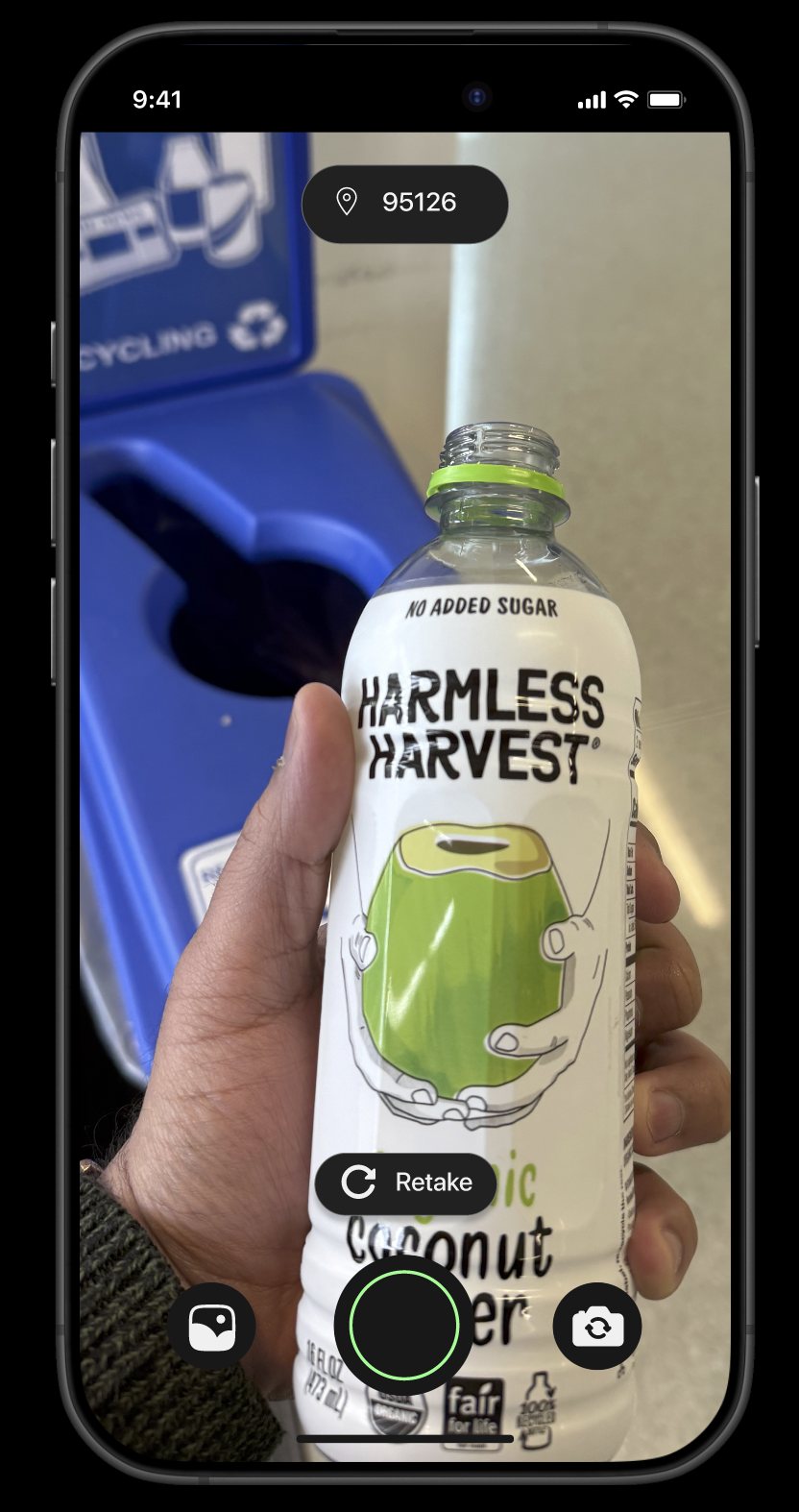
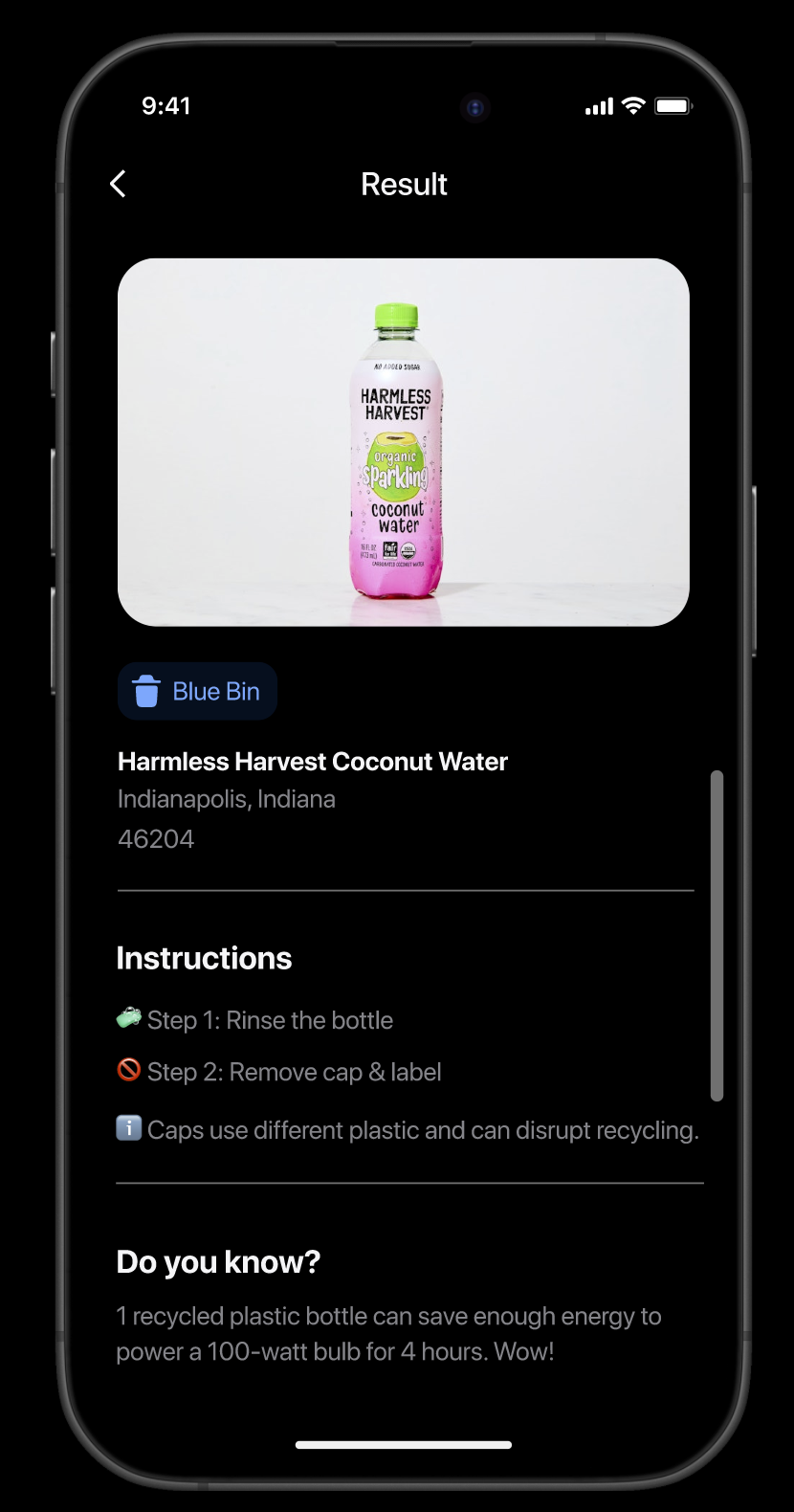
The early direction combined eco-conscious shopping, recycling, and rewards. We moved away from that broad proposition when the reason for people to care and return remained unconvincing. Toss shifted toward a more immediate question: could AI reduce uncertainty about what to do with an item? Recycling guidance is geographically dependent. A generic model can sound right while giving locally wrong advice. The product challenge was therefore more specific than generating a plausible answer. It needed to connect item understanding, location, and relevant recycling information in a way people would actually use.
My ownership
I led the product from discovery to the stop decision.
As Founding Product Manager, I led a roughly five-person engineering and product team. My work covered discovery, product direction, technical validation, pivots, monetization, and the final decision to stop further investment. Research included market and domain investigation, ethnographic studies, competitive analysis, SME interviews, personas, and opportunity analysis. I personally built the Roboflow CV experiment end-to-end, including dataset creation, labeling, training, testing, and iteration. The team contributed the wider product and engineering execution.
Evidence
Generic answers were not enough for a local problem.
We deliberately built a conversational AI agent to test the assistance hypothesis before investing in CV/OCR. That prototype was a way to learn, not proof of product-market fit. Later exploration included RAG, location-aware guidance, computer vision, and OCR / receipt concepts. RecycleNation data and USPS/location validation informed retrieval alongside LLM fallback. Technical evaluation reported approximately 94% recycling-answer coverage across roughly 9,000 ZIP codes. My Roboflow computer-vision experiment used 120+ labeled images to test whether recognition could reduce typing friction. Coverage is not the same as answer accuracy, and neither number establishes recurring customer value.
Product judgment
The question changed from “can we build it?” to “should we continue?”
Technical progress created new possibilities, but it did not resolve motivation, retention, or who would pay. I explored brand-funded rewards, extrinsic motivation, and monetization approaches. The product needed a durable reason for users to return and an economic reason for someone to fund that behavior. Improving the model could address one uncertainty while leaving the more important business uncertainty unchanged.
| Question | Evidence in this account | Decision implication |
|---|---|---|
| Can we build it? | Retrieval, local coverage, computer vision | Technical feasibility improved |
| Will people return? | Durable motivation / retention evidence remained weak | More capability did not settle the question |
| Who pays? | Rewards and monetization explored | Economics did not justify further investment |
Decision summary reconstructed from Mani’s account. Original artifact not supplied.
THE PIVOT / FROM A BROAD MISSION TO AN IMMEDIATE QUESTION
“Shop more consciously”
became “Where does this go?”
The early concept joined shopping, a Loop bag, and rewards. It made the mission visible, but left a more basic question: what would motivate someone to use this repeatedly?
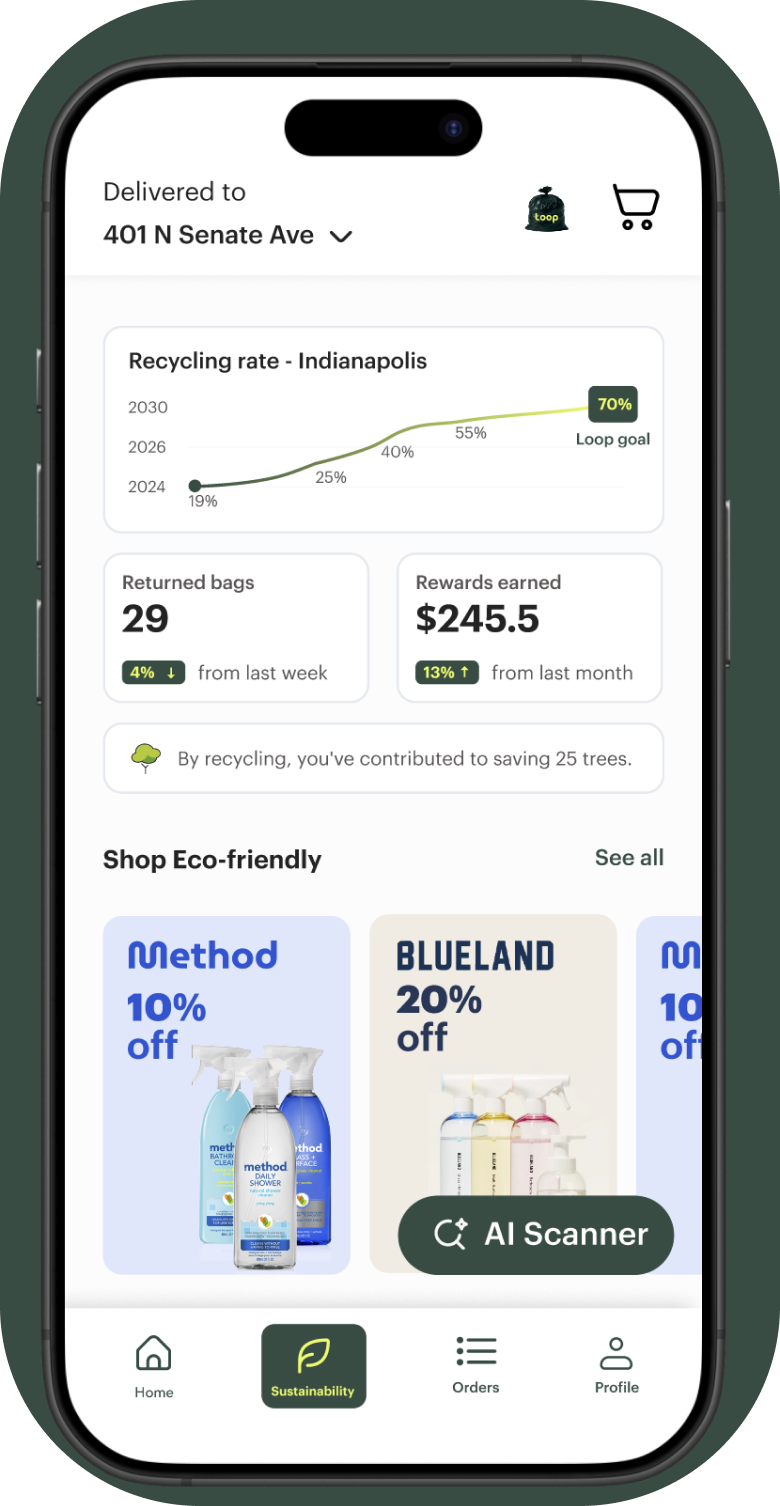
A broad shopping and sustainability proposition with a scanner entry point.
View original ↗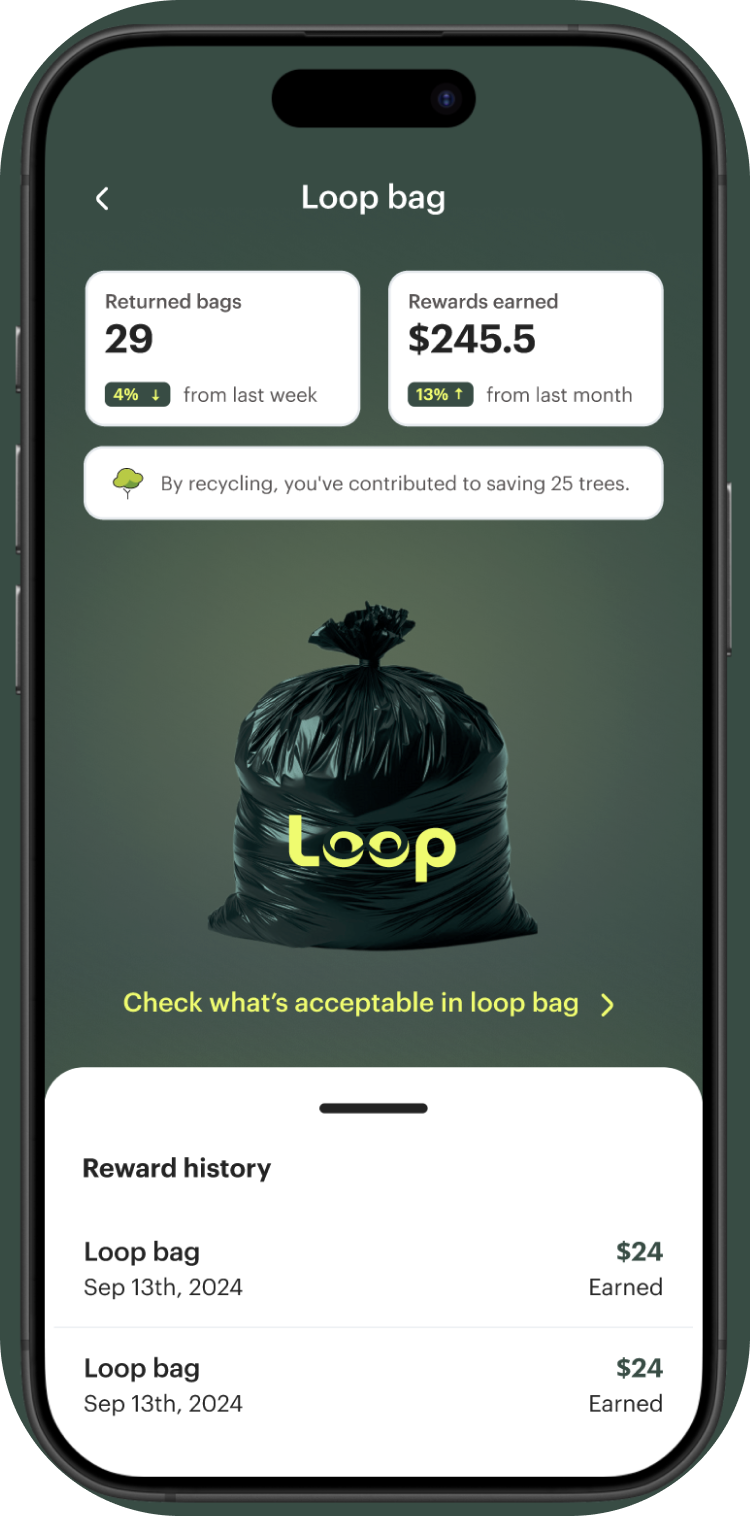
The Loop concept made returns and rewards visible as a possible motivation mechanism.
View original ↗Concept screens: rewards, environmental impact figures, retailer offers, and return counts are illustrative UI content, not measured outcomes or established partnerships.
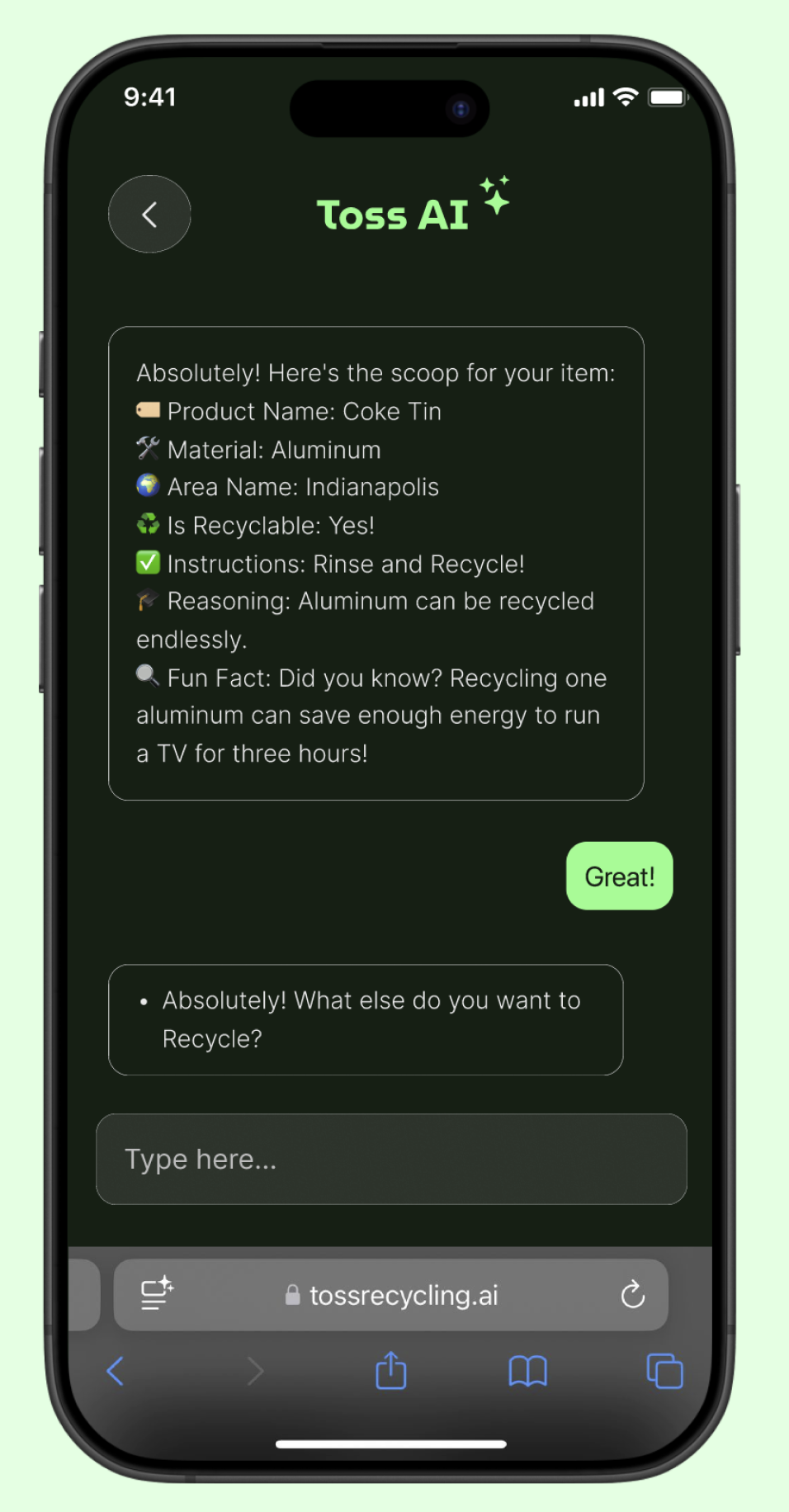
Supplied browser capture of Toss AI. The agent preceded CV/OCR to test the assistance hypothesis.
View original ↗TEST THE NEED BEFORE EXPANDING THE BUILD.
Start with
a conversation.
We built an AI conversation agent before computer vision and receipt recognition. It let us put the assistance proposition in front of people without first building the full scanning experience.
People would value help deciding how to dispose of an item in their location.
PRODUCT JUDGMENTTest the value of the answer before investing in more ways to capture the question.
This capture establishes a conversational prototype. It does not establish repeat use, answer accuracy, or successful hypothesis validation.
Trade-off
Stop improving the system when the investment case stays weak.
After approximately two meaningful product and monetization pivots, evidence for sustainable motivation, retention, product-market fit, and economics remained weak. I chose to stop further investment. This sacrificed additional technical iteration rather than treat engineering progress as sufficient reason to continue. The exact retention results, rewards invalidation evidence, and continuation threshold still need documentation. No invented failure percentage or dollar amount is attached to the stop decision.
Influence & execution
Lead through changing product hypotheses.
The team explored different interaction and technical approaches as the understanding of the problem evolved. Location-aware retrieval addressed the limits of generic guidance. Computer vision and OCR opened additional interaction possibilities. Business-model exploration then tested a different class of question: not whether the system could respond, but whether the product could support sustained behavior and viable economics. I led the direction and eventual stop decision across that progression.
Outcome
The result was a deliberate end to further investment.
The product demonstrated technical capability and went through meaningful product and monetization changes. It did not establish durable PMF or a sustainable business case. Stopping was the outcome, not a launch metric dressed up as success. The technical evidence remains part of the account because it explains why the decision was difficult: there was working technology worth appreciating, but not enough evidence to justify more investment.
Learning
Technical feasibility does not equal a viable product.
The recurring lesson is to distinguish the ability to build from evidence that people will return and someone will pay. Better answers and richer interaction can be useful while leaving the central business constraint unresolved. This case shows ownership through a difficult decision, including the willingness to stop rather than preserve the project because the technology was improving.
THE REASONING BEHIND THE RESULT
What made the decision difficult?
Inspect ownership, evidence, alternatives, technical constraints, and the limits of the result.
CONTINUE THROUGH THE WORK