Reported application rejection after Check Eligibility
Context
I joined the early team, close to the marketplace’s behavior.
I joined ZET in April 2021 as approximately employee #9 and the first design hire. The product was an advisor-led marketplace serving tier-3/tier-4 towns and suburban markets in India. The early app listed 30+ brands/products: choose a product, share a referral, help the customer apply outside ZET, then wait for status and payment. Banks and financial institutions supplied the products; local advisors helped customers discover and apply for them. The platform had roughly 800 MAU when I joined. My responsibilities expanded into growth, discovery, activation, retention, segmentation, funnel analysis, lending, and roadmap decisions.
My ownership
I connected user behavior to product opportunities.
I owned recurring advisor research, behavioral segmentation, and funnel analysis, translating those insights into product priorities and journey improvements. My work shaped experiences for highly engaged advisors, lending journeys, earlier eligibility checks, the secured-card opportunity, and lead transparency. The 7.5K power-user cohort guided this work with product, engineering, and financial-institution teams as ZET grew from roughly 800 to 150K MAU.
Evidence
A 7.5K cohort became a guide for product development.
I identified a cohort of roughly 7,500 advisors who engaged with the product daily, with some generating 25+ converted leads per month. Their usage patterns and recurring insights guided product development: what they needed to sell, where they lost momentum, and what would help them return. In the three-person meeting shown in this case, we defined a core lending persona capable of generating INR 1M+ in personal-loan opportunities. Elsewhere in the funnel, applicants could wait 7–14 days only to learn they were ineligible. These observations pointed to different product opportunities: support valuable behavior, improve matching, and reduce preventable friction.
A COHORT THAT SHAPED THE PRODUCT
Learn from the people
already creating value.
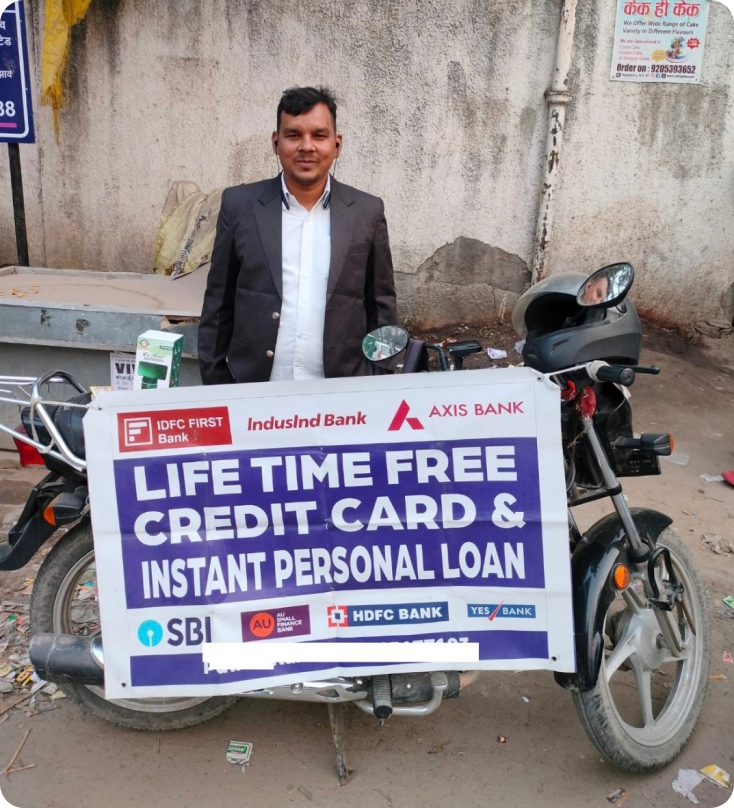
I used the 7.5K cohort’s recurring insights and usage to guide product development. Segmentation gave us a concrete group to understand: how they sold, where their leads stalled, and what support helped them stay active.

An original photograph from the ZET work. Research and product usage informed the questions behind the journey improvements.
THE PERSONA DECISION
Who could make
lending work?
This was the three-person meeting in which we defined the core lending persona: an advisor capable of generating INR 1M+ in personal-loan opportunities.
That sharpened the customer focus for lending journeys. The figure describes the persona’s opportunity potential.
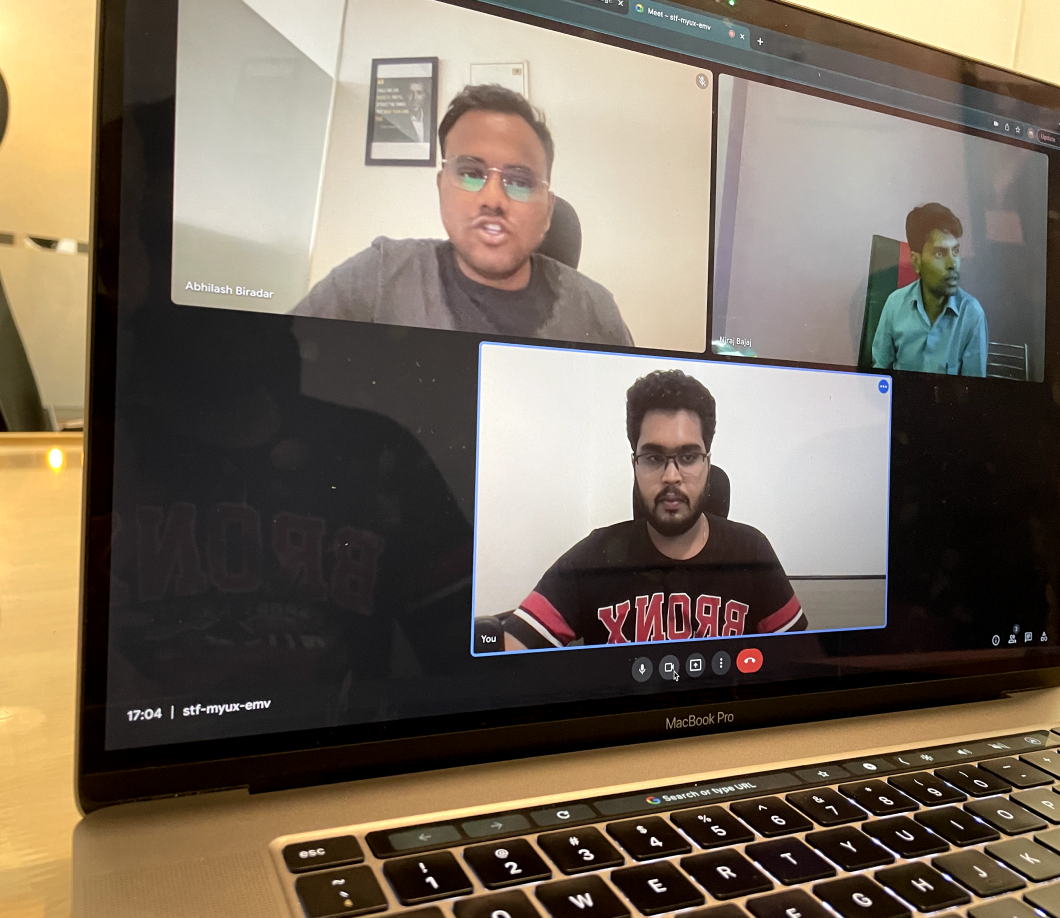
Original meeting photograph, identified by Mani as the core-persona decision discussion.
THE ADVISOR EXPERIENCE
Make the next selling action clear.
The original app screens show the journey from choosing a category to understanding an offer and sharing it with a customer.
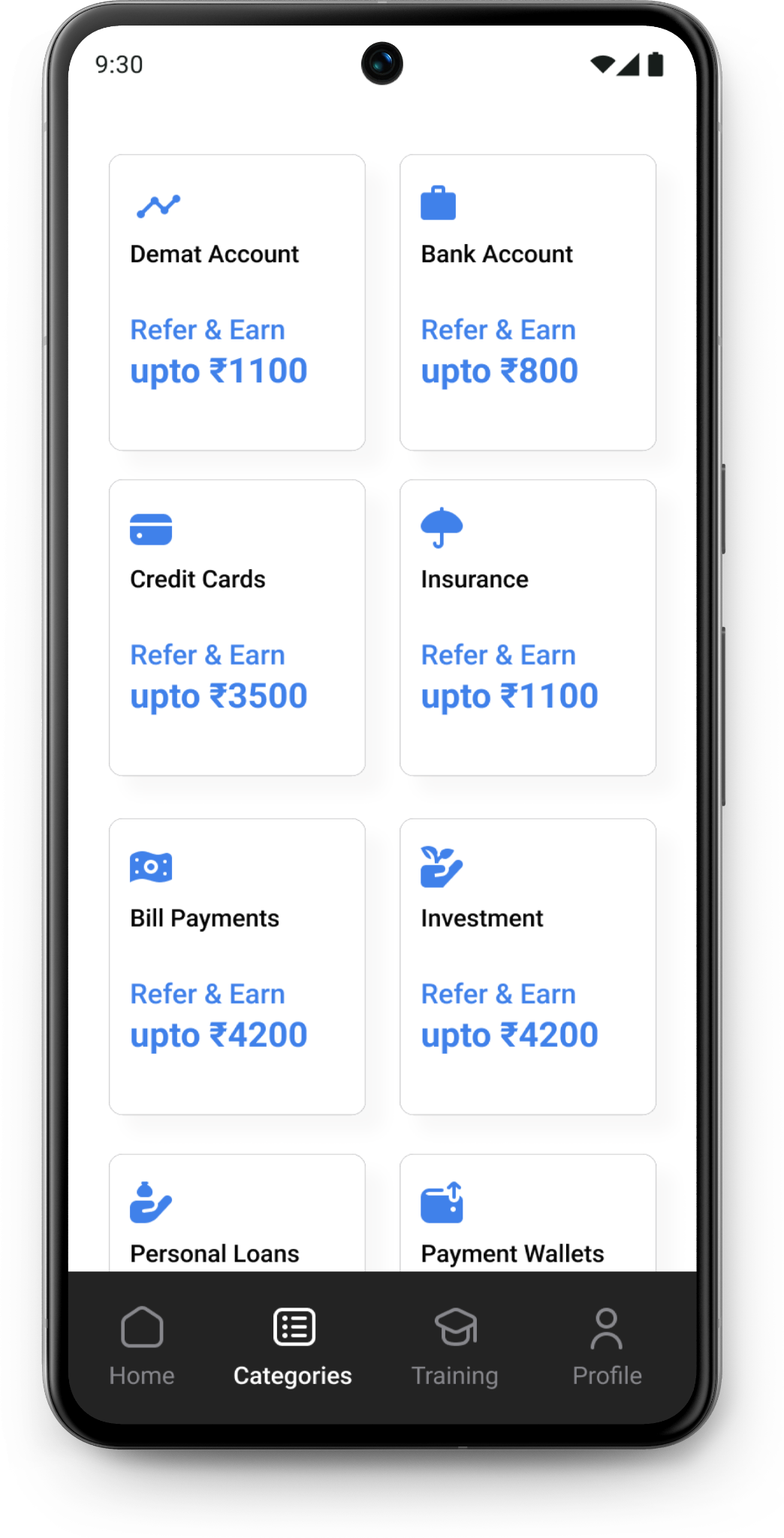
Explore the available financial-product categories.
View original ↗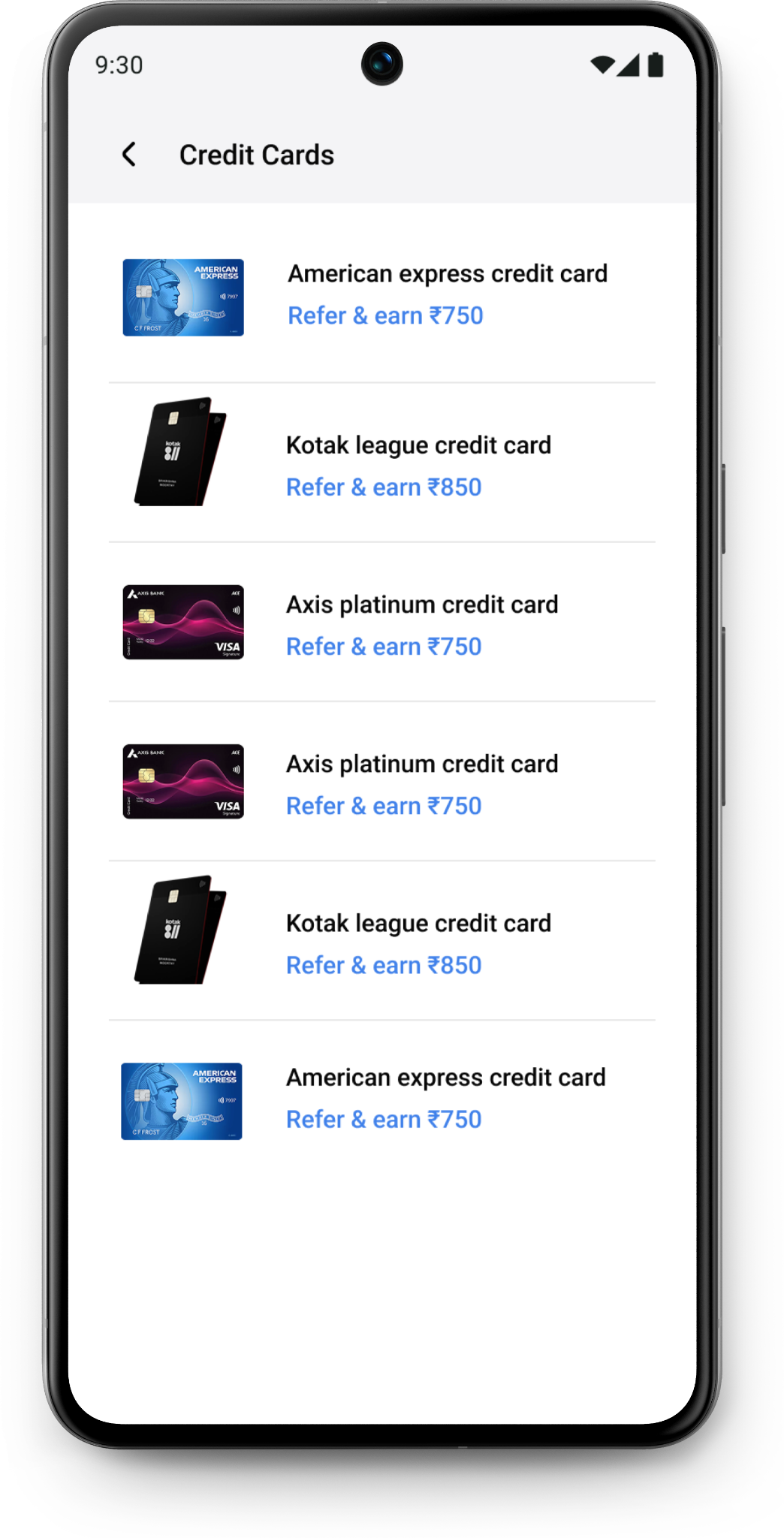
See the products and referral offers available within a category.
View original ↗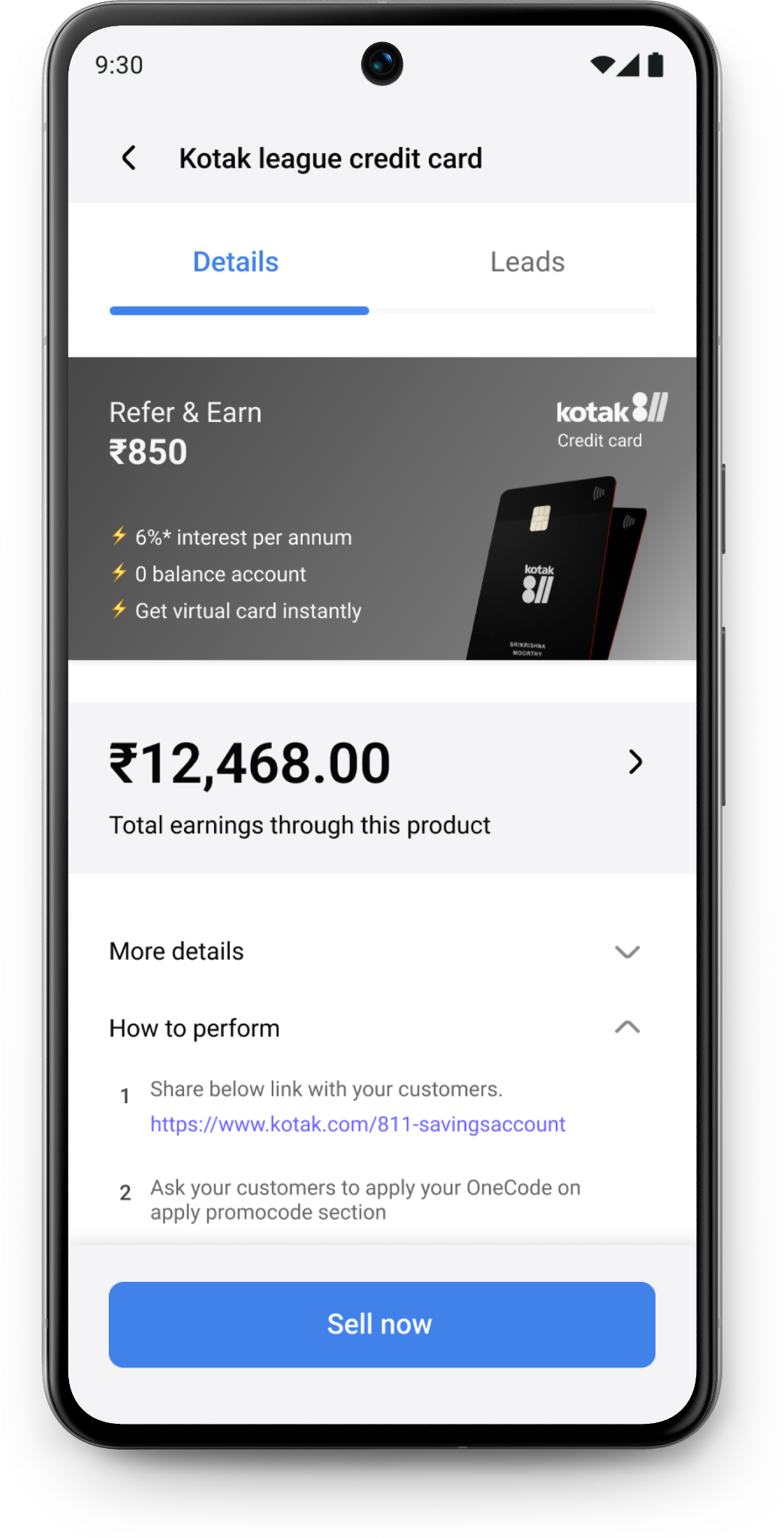
Review the product details, earnings, and next action.
View original ↗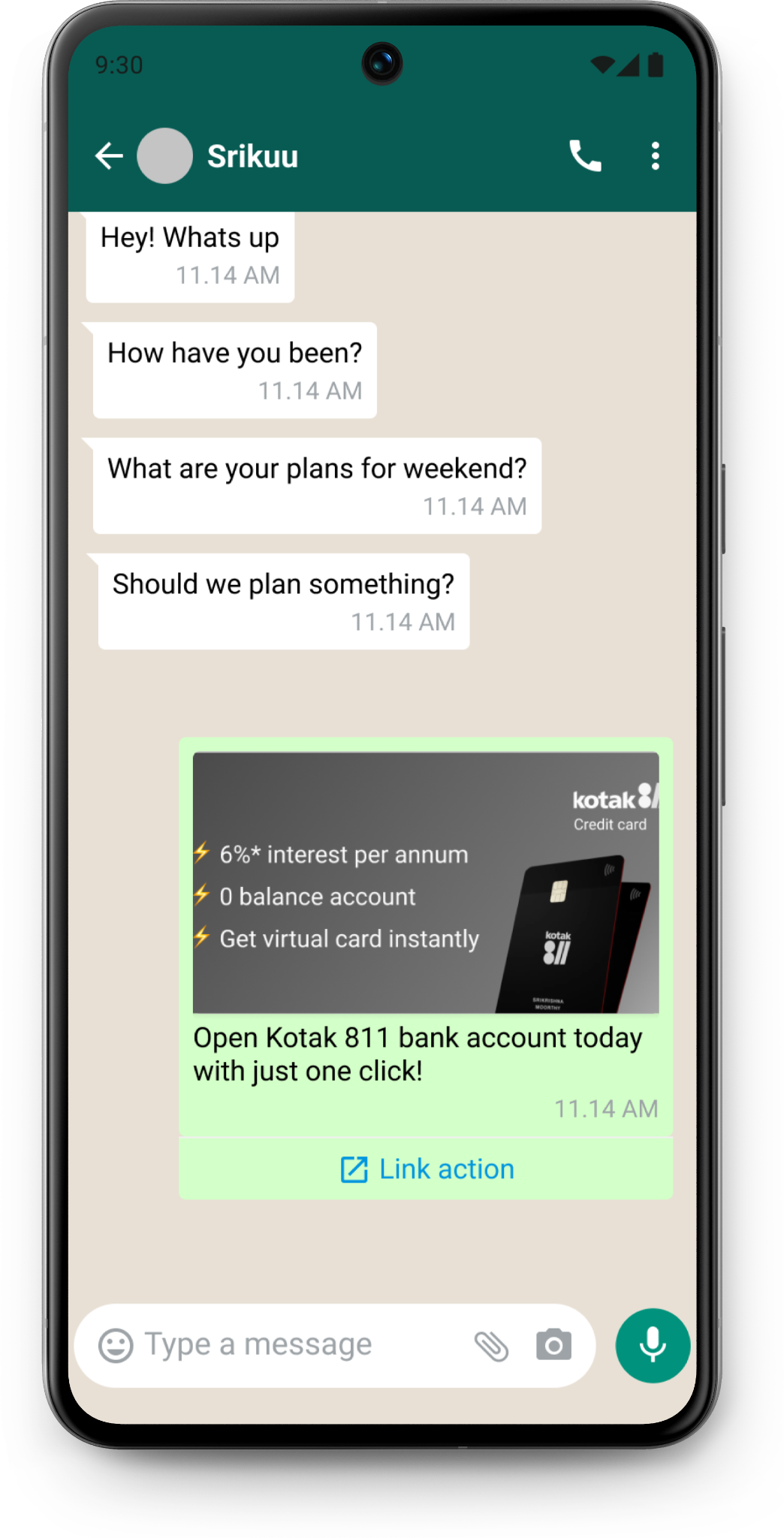
Continue the referral journey in a familiar conversation channel.
View original ↗Original project screens; displayed offers and amounts reflect the artifacts from that period.
Product judgment
Move the eligibility question before the full application.
Check Eligibility addressed a clear sequencing problem. Rather than let an advisor and customer complete an application and wait to discover ineligibility, the initiative used available credit-bureau and financial-institution data to support pre-qualification earlier. This connected customer pain to data and a product decision. I owned the Check Eligibility feature and UX, defining earlier qualification, eligibility signals, and product recommendations with data engineers. Engineering owned technical implementation; financial-institution teams supported the data and partnership requirements.
| Signal | Product response | Evidence boundary |
|---|---|---|
| High-value advisor behavior | Segmentation-led priorities | ~7.5K daily-engaged advisors; some generated 25+ converted leads/month |
| Distinct lending persona | New lending journeys | INR 1M+ opportunity, not revenue |
| Delayed ineligibility | Earlier pre-qualification | Reported rejection / activation outcomes |
| Limited credit history | Secured-card opportunity | Funnel insight and product experience work |
| Opaque lead status | Tracking and self-service | ~$15K monthly operating cost reduction |
Decision summary reconstructed from Mani’s account. Original artifact not supplied.
Trade-off
Choose better qualification and transparency over treating volume as the only goal.
The work focused on what happened to leads, not only how many entered the funnel. Approximately 66% application drop-off and findings that roughly 80% of credit-card rejections involved limited prior credit history informed a secured-card opportunity. Separately, lead-status tracking and rules-based self-service addressed the support burden created by uncertainty after submission. Exact roadmap exclusions and investment trade-offs need more context; I do not invent a feature-ranking exercise.
Influence & execution
Translate patterns into specific product responses.
Segmentation informed which advisor behavior deserved attention. Research informed lending journeys. Available data informed pre-qualification. Funnel analysis helped surface the secured-card opportunity, and support friction informed lead tracking. These are distinct decisions with shared logic: diagnose behavior, then change the relevant product mechanism. I connected these signals to actionable journey improvements and worked with the relevant teams to develop the product responses.
Outcome
Product work supported growth from 800 to 150K MAU.
In the first three months after launch, Check Eligibility reduced application rejection by approximately 16% and increased advisor activation by approximately 20%. Digitized lead-status tracking and rules-based self-service reduced monthly customer-service operating costs by about $15K. The operations cost base included staffing, office space, and equipment; team members moved into product marketing, training, and other teams. Research and usage insights from the 7.5K cohort guided my product contributions during ZET’s expansion from approximately 800 to 150,000 MAU.
Learning
Understand who creates value and where the system loses it.
The five decisions connect power-user behavior, activation, qualification, product expansion, and transparency. The recurring lesson is that growth work starts with the mechanism behind customer value and friction. The strongest individual chain is Check Eligibility: delayed rejection created pain; available data enabled earlier qualification; the initiative had reported activation and rejection outcomes.
THE REASONING BEHIND THE RESULT
What made the decision difficult?
Inspect ownership, evidence, alternatives, technical constraints, and the limits of the result.
CONTINUE THROUGH THE WORK